The Role of Visual Elements in Urban-Themed Design Projects
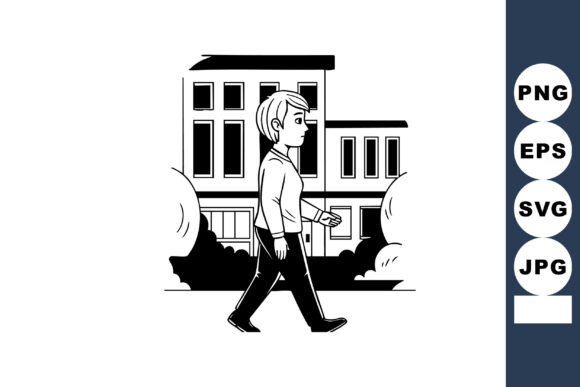
Visual elements play a critical role in shaping the tone, message, and usability of design projects, especially those centered around urban environments. One such element is the Man Walking in Urban Environment Street vector illustration. This image, featuring a man walking purposefully along a city street with buildings and bushes in the background in a black and white vector style, conveys a calm mood and offers a versatile visual asset for a variety of design workflows.
Understanding the Visual Concept
The Man Walking in Urban Environment Street illustration captures a moment of movement and intention within a city setting. Rendered in black and white, the image emphasizes form and composition over color, making it adaptable to a wide range of design contexts. The calm mood it projects is ideal for themes related to reflection, planning, or focused activity in urban spaces.
This visual asset is part of a downloadable ZIP package that includes SVG, EPS, JPG, and PNG files. This variety ensures compatibility across design tools and platforms, supporting both digital and print applications. Designers can scale the vector files without loss of quality, while raster formats provide flexibility for quick integration into websites, presentations, or printed materials.
Integrating into Design Workflows
Whether you're a professional designer, marketer, educator, or content creator, integrating the Man Walking in Urban Environment Street graphic into your workflow can enhance the visual narrative of your project. Here's how it can be used at different stages:
Before a Project
During the planning phase, this image can serve as a visual reference or mood board element. If your project revolves around urban life, city planning, commuting, or mindfulness in motion, the illustration can help define the visual direction. It can also be used in project proposals or client decks to communicate the intended aesthetic and emotional tone.
During a Project
As part of the active design process, the image can be incorporated into layouts for websites, brochures, infographics, or mobile applications. Its clean, monochrome style allows it to blend seamlessly with minimalist or modern design schemes. Designers can layer text or other graphics over the image without overwhelming the composition.
For example, a travel blog might use this image as a background for an article on urban exploration. A productivity app could integrate it into a feature that encourages users to take mindful breaks during their daily commute.
After a Project
Once a project is complete, the illustration can be repurposed for promotional materials, social media posts, or portfolio showcases. It serves as a recognizable visual that reinforces the project's theme and helps with brand consistency across platforms.
Working with Different File Formats
One of the strengths of the Man Walking in Urban Environment Street asset is the inclusion of multiple file types. Here's how each format can be used effectively:
- SVG – Ideal for responsive web design. The vector format ensures crisp visuals at any screen size and allows for CSS styling.
- EPS – Best for print projects and professional design software like Adobe Illustrator. EPS files maintain high quality and are editable for advanced customization.
- JPG – Suitable for quick use in web pages, email newsletters, or when file size is a priority. It’s widely supported but not scalable without quality loss.
- PNG – Offers transparency and lossless compression, making it useful for overlaying on backgrounds or integrating into layered designs.
Enhancing Workflow Efficiency
Incorporating this visual asset into your workflow can improve both efficiency and consistency. Here are some practical implementation tips:
- Organize Files Strategically – Store each format in clearly labeled folders (e.g., /svg, /jpg) to streamline access during different stages of the design process.
- Use Version Control – When modifying the image in design software, save incremental versions to avoid overwriting the original file.
- Align with Brand Guidelines – Ensure the image complements your existing color scheme and typography. Since it's black and white, it can easily be paired with any color palette.
- Test Across Devices – Preview how the image appears on desktop, tablet, and mobile screens, especially when using SVG or PNG formats.
- Leverage for Multiple Use Cases – Don’t limit the image to a single campaign or project. It can be reused in different contexts, such as event posters, app interfaces, or educational materials.
Complementing Other Design Tools and Resources
The Man Walking in Urban Environment Street illustration works well alongside other design tools and resources. It can be layered with UI kits, icon sets, or stock photography to create a more dynamic composition. For instance, combining it with a city skyline graphic or a map overlay can enhance the urban theme.
When used in conjunction with content management systems (CMS) like WordPress or design platforms like Figma and Canva, the image becomes part of a broader creative ecosystem. Its compatibility with both vector and raster editors ensures that it can be manipulated to fit specific design requirements without compromising quality.
Long-Term Use and Adaptability
Design assets like this one offer long-term value when integrated thoughtfully. As trends shift, the black and white aesthetic of the illustration ensures it remains timeless. Its calm mood and urban focus make it suitable for a wide range of industries, including:
- Urban planning and architecture
- Mental health and wellness
- Transportation and mobility
- Productivity and time management
- Travel and lifestyle content
By maintaining a library of such versatile assets, professionals can reduce the time spent sourcing new visuals for each project while maintaining a cohesive visual identity.
Final Thoughts
The Man Walking in Urban Environment Street illustration is more than a static image—it's a functional design element that supports planning, enhances visual storytelling, and improves workflow efficiency. Whether you're building a website, designing a mobile app, or creating educational content, this asset offers flexibility, quality, and thematic depth. By understanding how to integrate it effectively, you can elevate your projects while maintaining a streamlined and organized design process.